
Article : Mobile Saga
The mobile saga
In just 30 years, mobile phones have become integral to the lives of 7 billion people. Rarely has a technological innovation had such an impact. Personal, business and leisure uses are growing at such a rate that mobiles have left their mark on civilisation and even become an extension of ourselves...
Have you ever wondered about the magic behind your alerts vibrating or texts going ‘ding’ in your pocket when you’re on the bus? Or how you can stream the latest episode of your favourite series when out and about? It all starts with your mobile device – whether smartphone, tablet or laptop. Each is a transceiver, designed to send and receive data via radio waves from a base station antenna. As with any radio, the signal range is limited. The role of an operator such as Orange is to deploy enough antennas so that you are connected in as many locations as possible. This is known as mobile coverage.
Data exchanged between the mobile and antenna is then routed by cables to our data centres. These process and direct the data to the right destination according to the requirement: for example another mobile network antenna, a fixed telephone network or an IP server. The principle is simple. However, to provide a seamless user experience, it requires the operator to have significant technical capabilities and expertise in science, computing, electronics, fibre optics and more...
Beyond technology: a social revolution
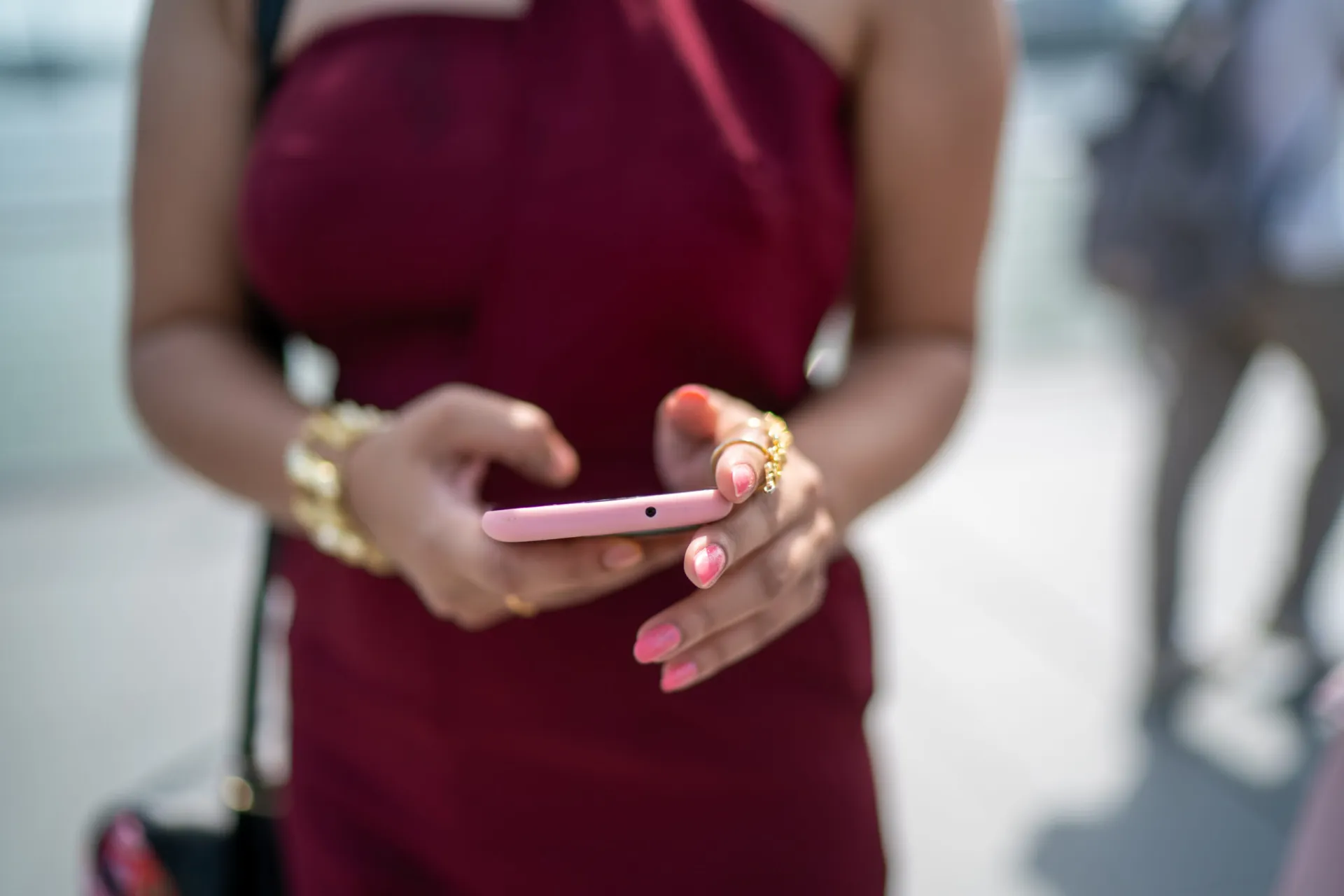
Since the first mobile networks appeared in the 1980s, we have certainly experienced some technical revolutions, but above all we've seen a world in transition. As our multi-country Observatory of Digital Uses shows, 61% of respondents stated that they are “never without my smartphone!”
Since the start of the new millennium, with the arrival of 3G and then 4G, new individual and collective uses for mobile devices have emerged: from listening to music to streaming videos, filming or FaceTiming each other, all while on the move.
Mobile networks, because they facilitate internet access, have a huge impact on business sectors and city life. For example the entertainment sector is developing quickly: the fact that customers can access music and online games all over the world means the industry has to change to keep pace. Similarly, catering, banking, tourism, health, education and the service sector are all evolving very rapidly. New professions are also emerging that are helping to shape society. Finally, you can’t separate technological innovations and ways people use technology. The two dimensions co-exist and feed each other.
Why increase speeds?
It all comes down to new uses. The fact that we’re all using more screens has led to an explosion of video on demand services. At the same time, mobile networks are facing bandwidth-hungry services including virtual reality, augmented reality, immersive games, remote access to business apps and more. In addition, the Internet of Things relies heavily on mobile technologies to connect sensors, machines and vehicles.
The resulting volume of data transported by mobile networks is doubling every year. Avoiding saturation takes more than meeting coverage needs; it requires extra network capacity. That takes innovation: today’s 4G enables speeds of 10-80Mbps versus 2-42Mbps achieved by 3G and only 9Kbps reached by the first GSM 2G networks. Now 5G is on the scene it offers a quantitative jump in speed (up to 10 times faster) along with a host of qualitative benefits. Research into 6G is also just beginning.
Orange, no. 1 mobile network in France
In 2019, for the 9th year running, Orange topped the ranking determined by French regulator ARCEP for the quality of mobile services in mainland France. Orange ranked first or equal first in voice, SMS and mobile data for 227 out of the 238 published criteria.


